
Corporate Social Responsibility & ESG
Founder’s Message
When I founded TopGrep Tech, we did not begin with capital abundance. We began with responsibility. In the early years, the company was built without external funding, without salary buffers, and without safety nets. What we did have was conviction — that employability is the strongest form of social security, and that structured capability building can transform both individuals and enterprises. CSR, for us, is not a compliance checkbox. It is architectural. We made three conscious decisions:
First — Skills before pedigree.
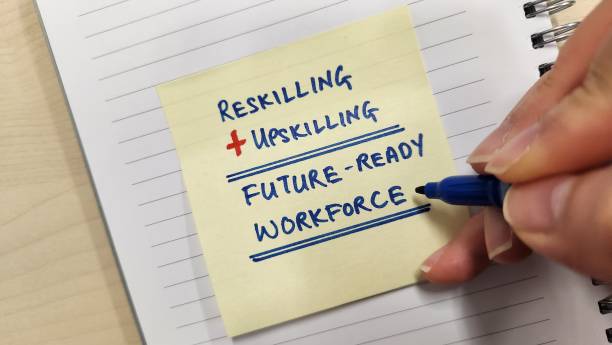
More than 70% of our workforce has been reskilled or cross-skilled. Many had faced job disruptions, career breaks, or geographic limitations. We did not hire for resume optics. We hired for potential and built capability through structured, hands-on delivery environments.
Second — Governance before growth.
We institutionalized ISO 27001:2022 controls, digitized HR and finance, built incident response matrices, defined SOPs, and established decentralized ownership with centralized KPIs. Responsibility must scale before revenue scales.
Third — Access before advantage.
Through our patented platform Aivagam, we reduced infrastructure barriers to technical education. A scholar without high-end hardware should not be excluded from becoming job-ready. Technology must reduce inequality — not reinforce it.
We measure our success across three axes:
Employment continuity
Skill acceleration velocity
Client reliability impact
When a reskilled engineer delivers securely to a logistics, fieldservice, sales-intelligence, ecommerce, healthcare or fintech enterprise, impact compounds across the value chain. We scale revenue responsibly. We invest back into people. As we grow, we ensure, governance can support that growth.
CSR is not something we “spend on.” It is something we design for.
—
Dr. Reine De Reanzi S.
Founder & CEO, TopGrep Tech
Reskilling Investment Efficiency Ratio (RIER)
5% capability investment yields 100% revenue productivity participation.
This shows high capital efficiency of human development.

Employment Multiplier Ratio (EMR)
EMR grows while reskilling ratio remains high, our model is scalable and efficient.

Reskilled Workforce Ratio (RWR)
We already exceed 70%.
which is a powerful social mobility metric.

Revenue-to-Training Reinvestment Ratio (RTRR)
Structured reinvestment, not ad-hoc L&D.

Economic Mobility Indicator (EMI)
- Responsible technology.
- Structured reskilling.
- Measurable economic mobility.
Post-Reskilling provisioning of income is a real CSR impact. Not theoretical. Social Impact Metrics like
- 70%+ Reskilled Workforce Ratio
- Tier II / III Regional Inclusion
- Job-Role Based Skill Acceleration
- Structured Performance Governance
- Governance-led
- Impact-measured
- Environmentally aware
- Capital-efficient

Governance Maturity Index (Qualitative + Quantitative)
| Governance Component | Status |
|---|---|
| ISO 27001:2022 | Certified |
| Digitized HR/Finance | 100% |
| Incident Response Matrix | Documented |
| SOP Coverage | 90%+ delivery processes |
| POSH Compliance | Active |
| KPI-based Performance | Implemented |

Infrastructure Substitution Impact (ESG)
Virtual Lab Model vs Physical Infra:
Traditional Lab:
Hardware CapEx
Electricity
Physical maintenance
Upgrade cycles
Aivagam Model:
Cloud-based
Scalable
Lower device dependency
Remote accessibility
Hardware avoided per 1000 learners
Estimated carbon reduction
Estimated 20–90 metric tons CO₂ avoided annually through virtual lab substitution and remote-first delivery model (based on conservative hardware and commute emission benchmarks).

STRUCTURAL IMPACT MODEL
Reskilling → Deployment → Revenue → Reinvestment → Economic Mobility → Governance Scaling
This is not CSR expenditure. This is CSR architecture.
Estimated Carbon Reduction Proxy
We calculate avoided emissions from two areas:- Avoided Physical Lab Infrastructure
- Avoided Commute Emissions (Remote Delivery Model)
This is a proxy model — conservative, defensible, and scalableA. Hardware Avoidance Carbon Proxy
Traditional Physical Lab Model (Per 100 Learners)
Typical setup:
100 desktops/laptops
Average device embodied carbon footprint: ~300 kg CO₂ per device (manufacturing + lifecycle estimate)
Hardware refresh cycle: 4 years
Total embodied carbon:
100 × 300 kg = 30,000 kg CO₂
= 30 metric tons CO₂
Annualized (over 4 years):
30 ÷ 4 = 7.5 metric tons CO₂ per year
Aivagam Virtual Lab Model
Learners use:
Existing personal devices
Cloud compute (shared infrastructure)
No institutional hardware procurement
Even after accounting for cloud compute emissions, shared infrastructure dramatically lowers per-learner carbon intensity compared to dedicated hardware labs.
Carbon Avoidance Estimate
For every 100 learners using virtual labs instead of dedicated hardware:
≈ 7.5 metric tons CO₂ avoided annually
If scaled to 1000 learners:
≈ 75 metric tons CO₂ avoided annually
This excludes electricity savings from lab facilities.B. Commute Reduction Proxy
Assumption:
220 working days/year
Average passenger vehicle emissions: ~0.12 kg CO₂ per km
Annual commute emissions per scholar:
20 × 220 × 0.12 = 528 kg CO₂
For n scholars: eg: n=1000
528 × 1000 = 5,28,000 kg CO₂
If operating remote-first at 60% reduction in commute:
23.7 × 0.60 ≈ 14.2 metric tons CO₂ avoided annually
Combined Conservative Estimate
From:
Hardware substitution (100 learners scale): 7.5 tons
Remote-first workforce: 14.2 tons
Total ≈ 21.7 metric tons CO₂ avoided annually (base scale)
At 1000 learners scale:
75 + 14.2 ≈ 89.2 metric tons CO₂ avoided annually